Why Fence Material Calculation Is Important
Building a fence seems simple on the surface: pick a style, buy some posts and panels, and start digging. But ask anyone who has actually completed a fencing project, and they’ll tell you the difference between a smooth build and a frustrating one almost always comes down to one overlooked step — material calculation.
Fence material calculation is the process of accurately estimating how much lumber, vinyl, chain link, concrete, hardware, and other supplies you’ll need before you break ground. It might sound like a minor administrative task, but it directly affects your budget, your timeline, the structural integrity of the fence, and even how good the final product looks. Skipping this step or doing it carelessly is one of the most common — and most costly — mistakes in fencing projects, whether for a backyard DIY job or a large commercial installation.
It Prevents Costly Overspending
Without a proper calculation, most people either overestimate or underestimate what they need. Overestimating means spending money on materials that end up sitting unused in a garage or being returned at a loss (many suppliers charge restocking fees or won’t accept opened packages of concrete, screws, or cut lumber). For large projects, over-ordering even by 10–15% can mean hundreds or thousands of dollars in wasted spend.
Accurate calculations let you order close to the exact amount needed, which keeps your budget tight and predictable — something that matters whether you’re a homeowner working with a fixed budget or a contractor trying to protect your profit margin on a bid.
It Avoids Project Delays
Underestimating materials is arguably worse than overestimating. Running out of posts, panels, or hardware halfway through installation means a trip back to the store — or worse, waiting days for a special order to arrive, especially with less common materials or specific paint-matched vinyl colors. This is particularly frustrating when weather conditions are favorable for digging and installation, and a shortage forces work to stop.
A precise material list, calculated before the project starts, ensures everything arrives together and the crew (or you) can work through the project without interruption.
It Ensures Structural Integrity
Fence material calculations aren’t just about quantity — they’re about correct spacing, post depth, and load distribution. Miscalculating post spacing, for example, can result in a fence that sags, leans, or fails under wind load. Similarly, underestimating concrete for post footings can leave posts unstable, especially in areas with high winds, heavy snow, or soft or sandy soil.
Getting the math right on post intervals, panel lengths, and footing depth is what keeps a fence standing upright for 15–20 years instead of needing repairs within a couple of seasons.
It Accounts for Terrain and Site Conditions
Every yard is different. Slopes, corners, gates, obstacles like trees or utility boxes, and irregular property lines all affect how much material you actually need. A flat calculation based purely on total linear footage often fails to account for the extra posts needed at corners, the additional bracing needed on slopes, or the shorter panel cuts required near gates.
Proper calculation involves walking the property, measuring actual distances (not just relying on a property survey, which can be outdated), and factoring in these site-specific quirks. This reduces on-site guesswork and rework.
It Helps With Permits and Code Compliance
Many municipalities have height restrictions, setback requirements, and material regulations for fences — especially for pool enclosures, corner lots, or historic districts. Calculating materials accurately, based on code-compliant heights and setbacks, helps you avoid installing a fence that later has to be modified or torn down due to a violation. This is a step that’s easy to overlook but can save significant time, money, and legal headaches.
It Reduces Waste and Environmental Impact
Ordering the right amount of material isn’t just financially smart — it’s environmentally responsible. Excess lumber, unused concrete bags, and leftover chain link often end up in landfills. Precise calculations reduce this waste, which matters more and more to environmentally conscious homeowners and businesses pursuing sustainability goals.
It Supports Better Negotiation and Supplier Relationships
When you know exactly what you need — down to the number of post caps and linear feet of top rail — you’re in a stronger position when negotiating with suppliers. Bulk orders calculated precisely can qualify for volume discounts, and clear, itemized material lists help suppliers give faster, more accurate quotes. Contractors who consistently order accurately also tend to build better long-term relationships with suppliers, which can translate into priority service and better pricing over time.
How to Calculate Fence Materials
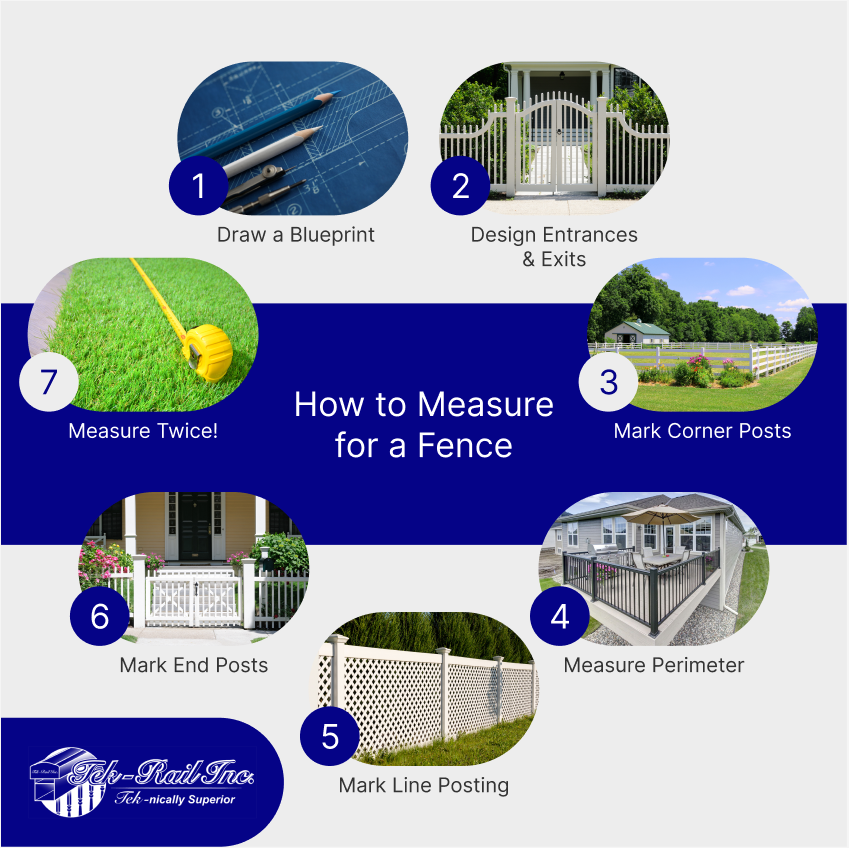
While every fence type has its own formula, the general process includes:
- Measure the perimeter — Calculate the total linear footage of the fence line, accounting for corners and gates separately.
- Determine post spacing — Typically 6–8 feet apart, depending on material and local wind conditions.
- Calculate post count — Divide total footage by spacing, then add one extra post for the final segment, plus additional posts for gates and corners.
- Estimate concrete — Based on post size and hole depth (usually one-third of the post’s above-ground height).
- Calculate panels or rail/picket materials — Based on style (privacy, picket, chain link, etc.) and desired height.
- Add hardware — Screws, brackets, hinges, latches, and post caps, typically calculated per post or per panel.
- Include a buffer — Many professionals add 5–10% extra material to account for cutting errors, waste, or damaged pieces.
(FAQs)
How much extra material should I order beyond my calculated amount? Most professionals recommend adding a 5–10% buffer for lumber, panels, and hardware to account for cutting mistakes, warped boards, or minor damage during transport.
Does fence material calculation differ by fence type (wood vs. vinyl vs. chain link)? Yes. Wood fences require calculating individual boards, rails, and posts; vinyl fencing usually comes in pre-measured panel kits, simplifying some math but requiring precise post spacing; chain link is calculated by linear footage of fabric, tension wire, and line posts.
How deep should fence post holes be? A common rule of thumb is that post holes should be about one-third of the post’s total length, though this can vary based on soil type, frost depth in your region, and local building codes.
Can I calculate fence materials without a survey of my property? It’s possible using a tape measure or measuring wheel, but a property survey is strongly recommended to avoid boundary disputes and ensure the fence is built on your own property.
What happens if I underestimate the concrete needed for posts? Insufficient concrete can lead to unstable posts that shift, lean, or heave over time, especially in freeze-thaw climates, which shortens the lifespan of the entire fence.
Is it worth hiring a professional just for material calculation? For small, straightforward yards, DIY calculation is usually manageable. For irregular lots, sloped terrain, or large commercial projects, a professional estimate can prevent costly mistakes and is often worth the investment.
Do online fence calculators give accurate results? Online calculators are a helpful starting point, but they often don’t account for slopes, obstacles, or local code requirements, so it’s wise to double-check their output against an actual site walk-through.
Final Thoughts
Fence material calculation might not be the most exciting part of a fencing project, but it’s one of the most important. It protects your budget, keeps your timeline on track, ensures the fence will actually hold up over the years, and helps you stay compliant with local regulations. Whether you’re a homeowner tackling a weekend DIY project or a contractor managing multiple job sites, taking the time to calculate materials accurately at the start will save you time, money, and frustration down the line.