
Fence Material Cost Calculator
Are you planning to install a new fence? A fence material cost calculator helps you budget accurately. It tells you exactly how much your materials will cost before you buy anything. As a result, you avoid surprises and stay within your budget.
In this guide, you’ll learn how a fence material cost calculator works. You’ll also find answers to common questions at the end.
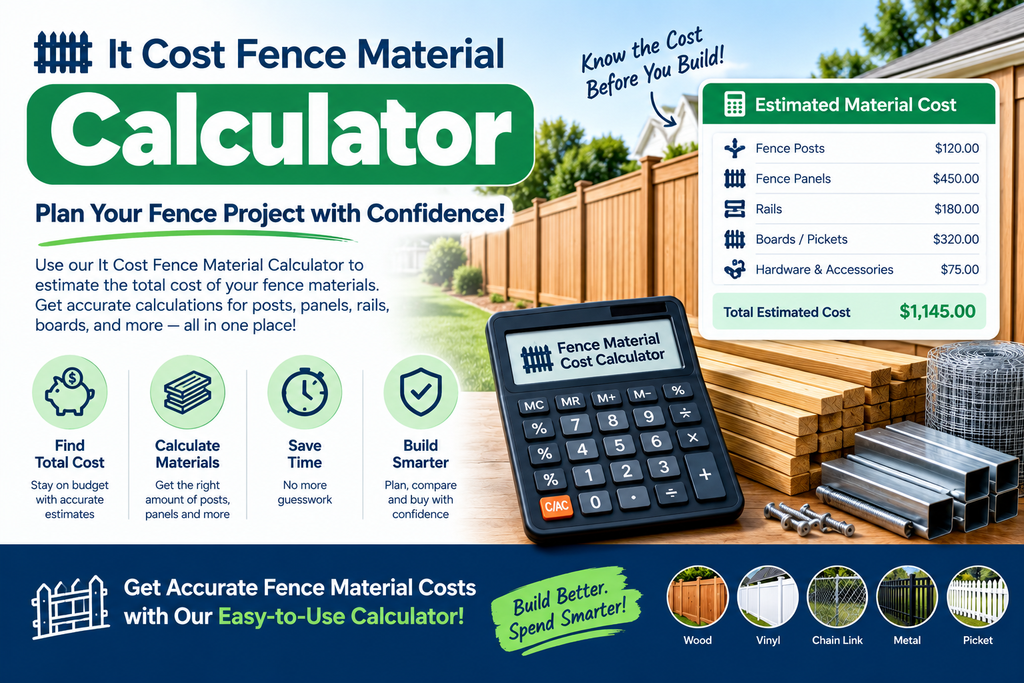
This guide breaks down how fence cost calculators work, what pricing factors go into them, and how to estimate your total project cost manually if you want to do the math yourself.
Why a Cost Calculator Than a Material List Alone
Knowing you need “23 posts and 40 rails” is useful, but it doesn’t tell you whether your project fits your budget. A fence material cost calculator goes a step further by multiplying quantities by local or average unit prices, giving you:
- Total material cost broken down by category (posts, rails, pickets, hardware, concrete)
- Labor cost estimates (if installation isn’t DIY)
- A side-by-side comparison of material types (wood vs. vinyl vs. chain-link vs. metal)
- A realistic total project budget, including a contingency buffer
This is especially valuable when comparing options — a wood fence might look cheaper on paper, but once you factor in staining, sealing, and shorter lifespan, vinyl or metal may actually save money over time.
Key Cost Factors in a Fence Project
1. Material Type This is the single biggest cost driver. As a rough national average guide (prices vary by region and market conditions):
- Chain-link: generally the most budget-friendly per linear foot
- Wood: mid-range, with cost varying widely by wood species and treatment
- Vinyl: higher upfront cost, but low maintenance over time
- Aluminum/steel: typically the most expensive, valued for durability and security
2. Fence Length and Height Cost scales directly with linear footage, and taller fences require more material per section — so a small increase in height can meaningfully raise the total cost.
3. Post Spacing and Count Closer post spacing means more posts, which increases both material and labor costs, but adds structural strength.
4. Concrete for Post Setting Each post hole typically needs about 1.5 bags of concrete mix, and concrete prices should be included in your total materials budget, not treated as an afterthought.
5. Gates and Hardware Gates add cost beyond the standard per-foot rate, since they require hinges, latches, heavier posts, and sometimes automatic openers for larger properties.
6. Labor Costs If you’re not installing the fence yourself, labor often makes up a substantial portion of the total project cost — sometimes comparable to or exceeding the material cost itself, depending on the region and fence complexity.
7. Site Preparation Sloped terrain, tree roots, or rocky soil can increase both time and cost, since extra excavation or grading work may be required before installation begins.
How to Manually Estimate Fence Cost
Step 1 — Calculate Material Quantities First Use a material calculator or manual formula to determine your post count, rail count, picket/panel count, and concrete bags needed (see our Fence Material Calculator guide for the full formulas).
Step 2 — Multiply Each Quantity by Unit Price Total Cost per Category = Quantity × Price per Unit
Example:
- 23 posts × price per post = Post Cost
- 40 rails × price per rail = Rail Cost
- 15 concrete bags × price per bag = Concrete Cost
3. Add Hardware and Gate Costs Sum the cost of screws, brackets, hinges, latches, and any gate-specific posts separately.
4 . Add Labor (If Applicable) Get quotes from local contractors, or estimate based on typical per-linear-foot installation rates in your area.
5. Add a Contingency Buffer Add 10–15% on top of your total to account for price fluctuations, waste, and unexpected site conditions.
6. Compare Material Options Run the same calculation across two or three material types to see which best fits your budget and long-term maintenance preferences.
Tips to Keep Fence Costs Under Control
- Buy materials in bulk where possible — many suppliers offer discounts on large orders.
- Time your purchase around seasonal sales, as fencing materials are often discounted in late fall and winter.
- Choose pressure-treated wood posts even for otherwise low-cost fences, since they last significantly longer and reduce replacement costs.
- Get multiple contractor quotes if you’re not doing the installation yourself — labor pricing can vary significantly between providers.
- Factor in maintenance costs, not just installation costs, when comparing materials — a cheaper fence upfront can cost more over a 10-year period if it requires frequent staining or repairs.
F A Q s
What’s the average cost per linear foot for a fence? Costs vary significantly by material, region, and fence height — chain-link tends to be the most affordable option, while wood, vinyl, and metal fences cost progressively more per linear foot. It’s best to get local supplier quotes for an accurate figure in your area.
Does a fence cost calculator include labor costs? Many calculators offer an optional labor estimate field, but the most accurate labor costs come from local contractor quotes, since rates vary widely by region and project complexity.
Is vinyl fencing more expensive than wood? Vinyl typically has a higher upfront cost than wood, but it requires less ongoing maintenance (no staining or sealing), which can make it more cost-effective over the long term.
How much should I budget for a fence gate? Gates generally cost more than an equivalent length of standard fencing due to additional hardware, heavier posts, and sometimes automatic opener mechanisms if desired.
Should I include concrete costs separately in my budget? Yes. Concrete for post holes is often overlooked in rough estimates but can add up meaningfully across a full fence line, so it should be calculated and budgeted as its own line item.
How much of a contingency buffer should I add to my fence budget? A 10–15% contingency buffer is generally recommended to cover material waste, price changes, and unexpected site conditions like rocky soil or tree roots.
Can a fence cost calculator help me compare different materials? Yes — most calculators let you switch material type and instantly see how the total cost changes, making it easy to compare wood, vinyl, chain-link, and metal options side by side.
Conclusion
A fence material cost calculator turns an abstract project idea into a concrete, plannable budget. By accounting for material prices, labor, hardware, and a reasonable contingency buffer, you avoid the common trap of underestimating your total spend. Whether you’re comparing wood against vinyl or simply trying to confirm your project fits your budget, calculating cost — not just quantity — is the step that keeps your fencing project financially on track.