
Barbed Wire Fence Material Calculator
Are you planning to install a barbed wire fence? A material calculator makes the job much easier. It tells you exactly how much wire, how many posts, and how much hardware you need. As a result, you save money and avoid running short on materials.
In this guide, you’ll learn how a barbed wire fence material calculator works. You’ll also find answers to common questions at the end.
What Is a Barbed Wire Fence Material Calculator?
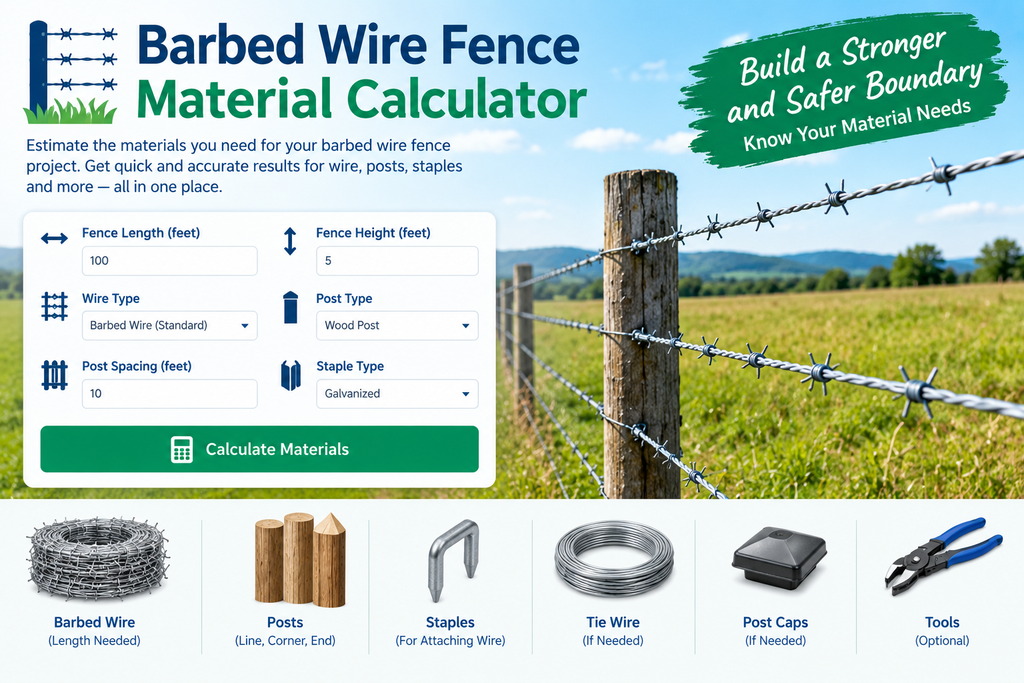
A barbed wire fence material calculator is a simple planning tool. You enter your fence length, number of wire strands, and post spacing. Then, it calculates the exact materials you need.
This includes barbed wire rolls, posts, staples, and tension hardware. So, instead of guessing, you get an accurate shopping list.
Why You Need One Before You Start
Building a barbed wire fence without a plan often leads to extra trips and wasted money. For example, you might buy too few wire rolls. Or you might run short on posts halfway through the job.
Therefore, a calculator removes the guesswork. It helps you plan your budget accurately from the start.
Information You’ll Need First
Before you calculate materials, gather these details:
- Total fence length (in feet or meters)
- Number of wire strands (usually 3 to 5 for livestock fencing)
- Post spacing (typically 10 to 16 feet apart)
- Corner and gate locations
- Terrain type (flat, sloped, or uneven)
Once you have these numbers, the calculation becomes quick and simple.
How to Calculate Barbed Wire Fence Materials
Measure the Fence Line
First, measure the total length of the area you want to fence. Include every corner and turn in your total.
Calculate Posts Needed
Next, divide the total fence length by your post spacing. Then add one extra post for the final section. For example, a 500-foot fence with 12-foot spacing needs about 43 posts.
Add Corner, End, and Brace Posts
Corner and end posts carry the most tension. So, count these separately and use heavier, well-braced posts for support.
Calculate Wire Needed
After that, multiply your fence length by the number of wire strands. This gives you the total wire footage required. For example, a 500-foot fence with 4 strands needs 2,000 feet of wire.
Convert Wire Footage to Rolls
Barbed wire typically comes in rolls of 1,320 feet (quarter-mile rolls). Divide your total wire footage by the roll length to find how many rolls to buy.
Add Staples and Tension Hardware
Finally, calculate staples based on two per post per strand. Then add wire stretchers, splices, and brace wire for corners and gates.
Common Mistakes to Avoid
Many landowners make similar planning errors. Here’s what to watch for:
- Skipping brace posts: Corners and ends need extra bracing, not standard line posts.
- Underestimating wire tension: Sloped or uneven ground needs extra stretching hardware.
- Forgetting staples: These add up fast across long fence lines.
- Buying the wrong strand count: More strands mean more wire and more cost.
Avoiding these mistakes keeps your project on time and on budget.
Tips for Accurate Planning
- Round measurements up, never down.
- Add 5-10% extra wire for splices and mistakes.
- Check local agricultural codes before finalizing your plan.
- Ask a farm supply expert to review your list before buying.
FAQs
How many posts do I need for a barbed wire fence?
Divide your total fence length by the post spacing, then add one. For example, a 400-foot fence with 10-foot spacing needs 41 posts.
How much barbed wire do I need per acre?
It depends on the shape of your land, but a standard 10-acre square lot typically needs around 2,640 feet of fence line per strand.
How many strands of barbed wire should I use?
Most livestock fences use 3 to 5 strands. Cattle fences often use 4, while sheep or goat fences may need more.
How far apart should barbed wire fence posts be?
Standard spacing is 10 to 16 feet for line posts. Closer spacing adds strength but increases material costs.
How many staples do I need per post?
Plan for two staples per strand, per post. A 4-strand fence needs about 8 staples per post.
Do corners need different materials?
Yes. Corners and ends need braced posts and extra wire for tension. Always calculate these separately from line posts.
Should I order extra wire and posts?
Yes. Always add 5-10% extra wire and a few spare posts. This covers splices, mistakes, and future repairs.
Can I use this calculator for sloped land?
Yes, but sloped land often needs extra posts and stronger tensioning hardware. Adjust your plan to account for the terrain.
Final Thoughts
A barbed wire fence material calculator takes the guesswork out of planning. It helps you buy the right materials on your first trip. So before you start setting posts, run your measurements through a calculator. You’ll save time, money, and unnecessary frustration throughout your project.