
Chain link Fence Material Calculator
Are you planning to install a chainlink fence? A material calculator makes the job simple. It saves you time, money, and guesswork. In this guide, you’ll learn how the calculator works and how to use it correctly.
What Is a Chainlink Fence Material Calculator?
A chainlink fence material calculator is a simple tool. You enter your fence measurements, and it tells you what materials you need. This includes fence fabric, posts, rails, and hardware.
As a result, you avoid buying too much or too little material. That means fewer trips to the store and less wasted money.
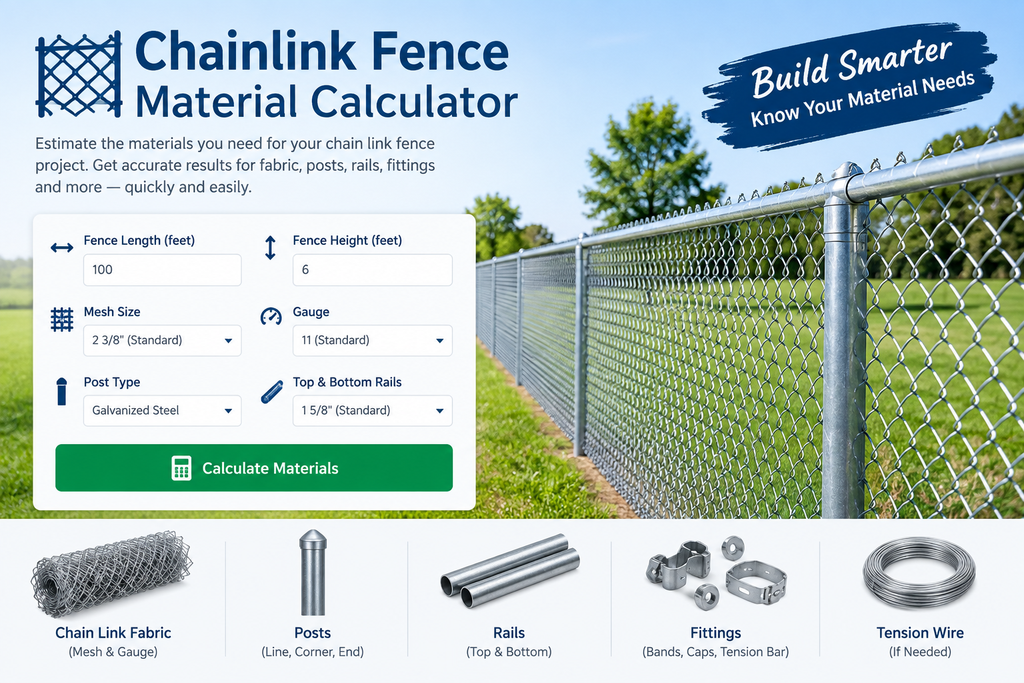
Why You Need One Before You Start
Buying fence materials without a plan often leads to problems. For example, you might run short on posts halfway through the job. Or you might overspend on fabric you don’t need.
Therefore, a calculator helps you plan ahead. It gives you a clear shopping list before you spend a single rupee. So you can budget accurately and avoid delays.
What Information You’ll Need
Before you use the calculator, gather these details:
- Total fence length (in feet or meters)
- Fence height (usually 4, 5, or 6 feet)
- Post spacing (typically 8 to 10 feet apart)
- Gate width, if you’re adding a gate
- Terrain type (flat or sloped)
Once you have these numbers, the calculator can do the rest.
How the Calculator Works: Step by Step
Measure Your Fence Line
First, measure the total length of the area you want to fence. Walk the perimeter and note any corners or turns.
Calculate the Number of Posts
Next, divide the total length by your post spacing. Then add one extra post for the end. For instance, a 100-foot fence with 10-foot spacing needs 11 posts.
Add Corner and Gate Posts
Corners and gates need stronger posts. So, count each corner and gate location separately. These posts carry extra weight and tension.
Calculate Fabric Needed
After that, multiply the fence length by the fence height. This gives you the total square footage of chainlink fabric required.
Add Rails and Hardware
Finally, calculate the top rail length, which usually matches your total fence length. Then add tension bands, post caps, and tie wires based on your post count.
Common Mistakes to Avoid
Many homeowners make the same errors. Here’s what to watch for:
- Skipping corner posts: These need extra support, not standard line posts.
- Ignoring slopes: Sloped ground often needs extra posts or adjusted spacing.
- Forgetting hardware: Tension bands, tie wires, and caps add up quickly.
- Underestimating gate posts: Gates need heavier, more stable posts than regular fencing.
Avoiding these mistakes saves you an extra trip to the hardware store.
Tips for Accurate Results
- Always round up your measurements, not down.
- Add 5-10% extra fabric for waste and mistakes.
- Check local building codes before you finalize your plan.
- Ask a hardware store expert to double-check your list if you’re unsure.
Final Thoughts
A chainlink fence material calculator takes the stress out of planning. It helps you buy the right materials the first time. You’ll save time, money, and frustration along the way.