Why Use a Fence Material Calculator
If you’ve ever started a fence project by “eyeballing” how much material you’d need, you already know how that usually ends — either a truck bed full of leftover pickets or a second trip to the store because you came up short. A fence material calculator exists to fix exactly that problem. Here’s why it’s worth using one before you buy a single post.
It Saves You Money
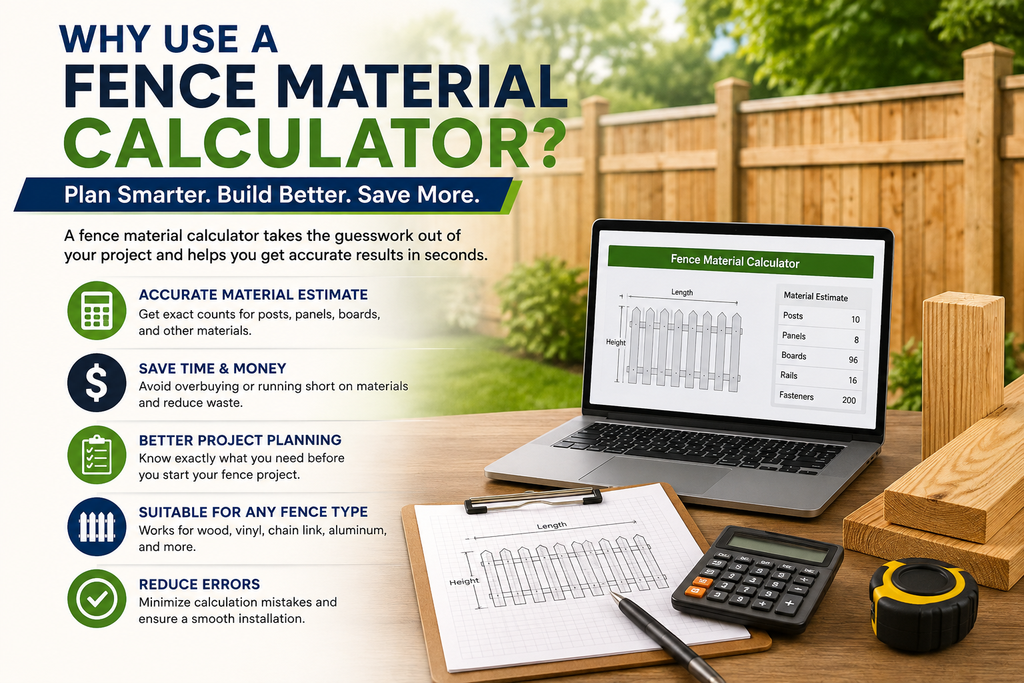
Overbuying materials is one of the most common (and avoidable) costs in a DIY fence project. A calculator gives you an exact count of posts, rails, pickets, and hardware based on your actual measurements — not a rough guess — so you’re not paying for extra lumber or concrete that ends up sitting in your garage.
It Saves You Time
Doing the math by hand means working out post spacing, rail counts, picket widths, and gate allowances all separately — and redoing it every time you change the height or style. A calculator does all of that instantly, so you can compare a few different layouts in minutes instead of redrawing your fence line on paper each time.
It Prevents Mid-Project Store Runs
Running out of pickets halfway through a Saturday build is frustrating and eats into your weekend. A calculator gives you a complete shopping list upfront — posts, rails, pickets, concrete, brackets, gate hardware — so you can buy everything in one trip.
It Helps With Accurate Budgeting
Because the calculator outputs actual quantities, you can multiply by local material prices to get a real cost estimate before you commit to a project — useful whether you’re planning your own budget or comparing quotes from contractors.
It Reduces Costly Mistakes
Fence math has a lot of small rounding decisions built in — like rounding up post counts at the ends of a run, or accounting for a gate that interrupts a fence line. These are easy to get wrong by hand, and a mistake here can mean an uneven fence or a gate that doesn’t fit. A calculator applies the right rules consistently.
It Works for Any Fence Style
Whether you’re building a privacy fence, picket fence, chain-link, or split rail, a good calculator adjusts its material list based on the style you choose — so you don’t have to manually re-learn the requirements for each type.
It’s Useful for Both DIYers and Pros
Homeowners use it to plan a weekend project with confidence. Contractors use it to quickly generate accurate quotes for clients without spending extra time on manual takeoffs.
Bottom Line
Using a fence material calculator means fewer wasted materials, fewer surprise trips to the store, and a much more accurate budget — all from a few minutes of entering your fence length, height, and style before you start building