Privacy Fence Material Calculator
Are you planning to build a privacy fence? A material calculator helps you plan every step. It tells you exactly how much wood, hardware, and concrete you need. As a result, you avoid overspending and running short on supplies.
In this guide, you’ll learn how a privacy fence material calculator works. You’ll also find answers to the most common questions homeowners ask.
What Is a Privacy Fence Material Calculator?
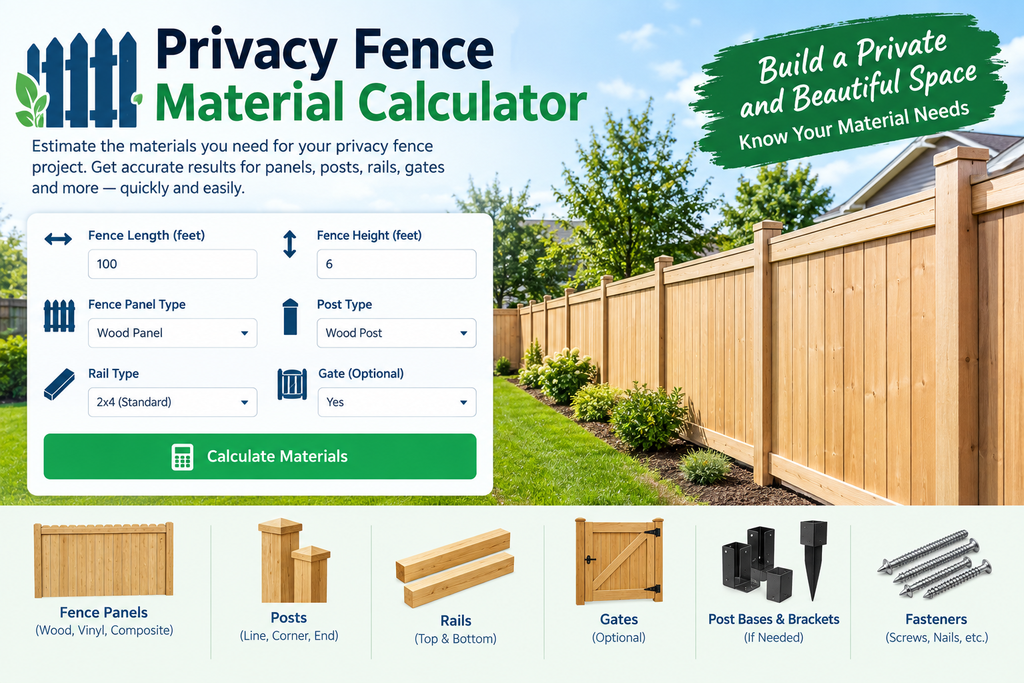
A privacy fence material calculator is a simple planning tool. You enter your fence length, height, and style. Then, it calculates the exact materials you need.
This includes fence panels or pickets, posts, rails, concrete, and hardware. So, instead of guessing, you get a precise shopping list.
Why Use a Calculator Before You Build
Building a fence without a plan often leads to extra costs. For example, you might buy too few posts. Or you might run out of pickets halfway through the project.
Therefore, a calculator removes the guesswork. It helps you budget accurately from day one. It also saves you extra trips to the hardware store.
Information You’ll Need First
Before you calculate materials, gather these details:
- Total fence length (in feet or meters)
- Fence height (usually 6 or 8 feet for privacy)
- Post spacing (typically 6 to 8 feet apart)
- Picket or panel width
- Gate width and number of gates
- Terrain type (flat, sloped, or uneven)
Once you have these numbers ready, the calculation process becomes quick and easy.
How to Calculate Privacy Fence Materials: Step by Step
Measure the Fence Line
First, measure the total perimeter of the area you want to fence. Include every turn and corner in your measurement.
Calculate Posts Needed
Next, divide the total fence length by your post spacing. Then, add one extra post for the final section. For example, a 120-foot fence with 8-foot spacing needs 16 posts.
Add Corner and Gate Posts
Corner and gate posts carry more weight than line posts. So, count these separately and use heavier posts for extra support.
Calculate Pickets or Panels
After that, divide the fence length by your picket width. This gives you the total number of pickets required. If you’re using pre-built panels, divide the fence length by the panel width instead.
Calculate Rails
Most privacy fences need two or three horizontal rails per section. Multiply the number of sections by the rails per section to get your total.
Add Concrete and Hardware
Finally, calculate concrete bags based on post depth and diameter. Then, add screws, brackets, post caps, and hinges for gates.
Common Mistakes to Avoid
Many homeowners make similar planning errors. Here’s what to watch for:
- Ignoring slopes: Sloped yards often need stepped panels or extra posts.
- Underestimating concrete: Deeper posts need more concrete than expected.
- Skipping extra pickets: Always order 5-10% extra for cuts and mistakes.
- Forgetting gate hardware: Gates need hinges, latches, and stronger posts.
Avoiding these mistakes keeps your project on budget and on schedule.
Tips for Accurate Planning
- Round measurements up, never down.
- Check local zoning laws for fence height limits.
- Choose pressure-treated wood for ground contact posts.
- Ask a lumberyard expert to review your list before buying.
FAQs
How many fence posts do I need for a privacy fence?
Divide your total fence length by the post spacing, then add one. For example, a 100-foot fence with 8-foot spacing needs 13 posts.
How deep should privacy fence posts be set?
Most posts need to be set at least one-third of their above-ground height. For a 6-foot fence, dig holes around 24 inches deep.
How much concrete do I need per post?
A standard post hole typically needs one to two 50-pound bags of concrete. Deeper or wider holes need more.
What is the standard post spacing for privacy fences?
Most privacy fences use posts spaced 6 to 8 feet apart. Closer spacing adds strength but increases material costs.
How many pickets do I need per fence section?
Divide the section width by the picket width, including small gaps between boards. A typical 8-foot section needs around 15 to 17 pickets.
Should I add extra materials to my order?
Yes. Always add 5-10% extra pickets and hardware. This covers cutting errors and damaged pieces.
Can I use a material calculator for sloped yards?
Yes, but sloped yards often need extra posts or stepped panel sections. Adjust your calculations to account for the terrain.
Do gates need different materials?
Yes. Gates need heavier posts, hinges, and latches compared to standard fence sections. Always calculate gate materials separately.
Final Thoughts
A privacy fence material calculator takes the stress out of planning. It helps you buy the right materials on your first trip. So, before you start digging post holes, run your measurements through a calculator. You’ll save time, money, and unnecessary frustration throughout your project.