
How to Estimate Your Fence Costs Accurately
Building a fence is one of the most cost-effective ways to add privacy, security, and curb appeal to a property. Buy too little and you face delays and extra delivery fees. Buy too much and you’ve wasted money on leftovers. A fence material calculator, or the simple math behind one, helps you order the right amount the first time.
This guide walks through how to calculate materials for any fence and turn them into a realistic budget.
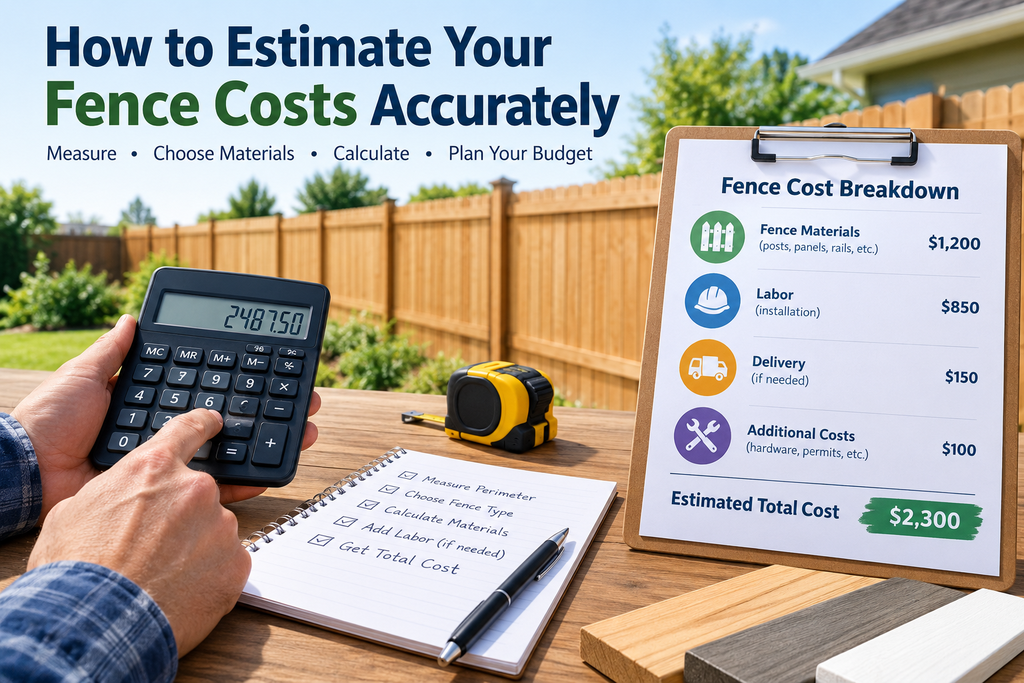
Measure Your Fence Line
Start with the total length of fence you need. Walk the perimeter with a tape measure or measuring wheel and note:
- Total linear feet (or meters) of fence
- Gate locations and widths (subtract these from the total run)
- Slopes or uneven ground, which affect panel choice and post height
Sketch a simple diagram. Even a rough drawing prevents costly mistakes.
Calculate the Number of Posts
Posts are the backbone of your fence. The basic formula is:
Posts = (Total fence length ÷ Post spacing) + 1
Typical spacing is 6 to 8 feet for wood and vinyl, and 8 to 10 feet for chain link. Add extra posts for each corner, gate, and end.
Calculate Panels, Pickets, or Rails
For panel fences (vinyl, aluminum, pre-built wood):
Panels = Fence length ÷ Panel width. A 200-foot run with 8-foot panels needs 25 panels.
For picket fences:
Pickets = (Fence length in inches ÷ (picket width + gap)). A 200-foot fence has 2,400 inches. With 3.5-inch pickets and a 0.5-inch gap, that’s 2,400 ÷ 4 = 600 pickets.
Rails: Most fences use 2 rails for heights up to 4 feet and 3 rails for taller fences. Multiply the number of sections by the number of rails per section.
Add Hardware and Extras
People often forget the small items. Include:
- Concrete: roughly 1 to 2 bags per post
- Gravel for drainage at the post base
- Screws, nails, or brackets
- Gate hardware: hinges, latch, and drop rod for double gates
- Post caps, stain, or sealant
Estimate Costs by Material
| Material | Approx. cost per linear foot (installed) | Lifespan |
|---|---|---|
| Chain link | $10 to $25 | 15 to 20+ years |
| Pressure-treated wood | $15 to $35 | 10 to 15 years |
| Cedar wood | $20 to $45 | 15 to 20 years |
| Vinyl (PVC) | $25 to $50 | 20 to 30 years |
| Aluminum | $25 to $60 | 25+ years |
| Wrought iron/steel | $30 to $100+ | 30+ years |
Cost formula:
Total cost = (Materials + Hardware + Labor + Permits) × 1.10 (waste and contingency)
Adding 5 to 10% for waste covers cuts, mistakes, and damaged pieces.
Factor In Labor and Other Costs
- Old fence removal, which can add several dollars per foot
- Land clearing or grading
- Delivery charges
Tips to Lower Your Fence Cost
- Choose the right height. Every extra foot adds cost.
- Buy off-season. Demand and prices often dip in late fall and winter.
- Reduce gates and corners, which are the most expensive parts.
- Consider lifetime cost, not just upfront price.
FAQs
2. How many fence posts do I need per foot?
Divide the fence length by post spacing and add one. For 8-foot spacing, that’s about one post per 8 feet, plus extras for corners and gates.
3. How much does a fence cost per foot?
Costs range from about $10 per foot for basic chain link to $60 or more for aluminum and ornamental iron. Wood and vinyl typically fall between $15 and $50 per foot installed.
4. What is the cheapest fence material?
Chain link and basic pressure-treated wood are usually the most affordable options upfront.
5. What is the most durable fence material?
Aluminum, steel, and wrought iron last longest, often 25 to 30+ years, with little maintenance. Vinyl also lasts long and resists rot and pests.
6. How deep should fence posts be?
A common rule is to bury one-third of the post’s total length, and at least 24 inches deep, with deeper holes in areas with frost or loose soil.
7. How much concrete do I need for fence posts?
Plan on 1 to 2 bags (50 lb) of fast-setting concrete per post, depending on hole size and post thickness.
8. Should I build the fence myself or hire a professional?
DIY can cut costs by up to half, but professionals bring speed, tools, and experience with permits and property lines. Complex or sloped sites are often worth hiring out.
9. Do I need a permit to build a fence?
Often yes. Rules on height, materials, and property-line setbacks vary by location, so check with your local authority before you buy anything.
10. How much extra material should I order?
Order 5 to 10% extra to cover cutting waste, defects, and mistakes.
Final Thoughts
A fence material calculator takes the guesswork out of budgeting. Measure carefully, calculate posts, panels, and hardware, apply current local prices, and add a waste allowance. With accurate numbers in hand, you can compare quotes confidently and avoid surprise costs.